
Difference Between Toile, Chinoiserie, and Rococo Prints
, by Choon Hee Lee, 3 min reading time
, by Choon Hee Lee, 3 min reading time
French decorative arts have inspired interiors, textiles, and fashion for centuries. Among the most beloved historic styles are Toile, Chinoiserie, and Rococo prints. While they are often grouped together for their romantic European aesthetic, each style has its own history, artistic language, and cultural influence.
 Philippe Wyngaert 1820s
Toile de Jouy originated in 18th century France and became famous for its detailed pastoral scenes printed on cotton fabric. The word “toile” simply means “cloth” in French, while “Jouy” refers to the town of Jouy-en-Josas where the fabric was produced.
Classic toile designs usually feature:
Rural landscapes
Romantic countryside scenes
Shepherds, gardens, and animals
Delicate monochromatic linework
Traditional toile was often printed in a single color such as blue, red, black, or sepia on a cream background. The style feels elegant, calm, and timeless, which is why it remains popular in both fashion and home décor today.
Key Characteristics
Monochromatic illustrations
Repeating narrative scenes
Fine engraved-style lines
French pastoral elegance
 England, 19th century
Chinoiserie emerged in Europe during the 17th and 18th centuries as fascination with Asian art, porcelain, and trade grew. Rather than being authentically Chinese, Chinoiserie was a European interpretation and fantasy inspired by East Asian motifs.
Common elements include:
Pagodas and temples
Exotic birds and flowers
Bamboo and lacquer-inspired details
Flowing asymmetrical compositions
Chinoiserie is typically more decorative and ornamental than toile. It often uses vibrant colors, gold accents, and luxurious compositions.
Key Characteristics
Asian-inspired fantasy imagery
Decorative florals and birds
Elegant asymmetry
Ornamental and luxurious feeling
 Issued by William S. Kimball & Company 1889
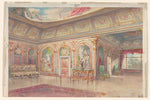
Rococo developed in early 18th century France as an artistic movement emphasizing elegance, movement, and elaborate decoration. Unlike toile, which tells visual stories, Rococo focuses more on ornamental beauty and flowing decorative forms.
Rococo motifs often include:
Curved scrolls and shells
Floral garlands
Gold embellishments
Soft pastel palettes
Romantic theatrical movement
The style feels playful, luxurious, and highly decorative. Rococo heavily influenced furniture, interiors, paintings, fashion, and textile patterns throughout Europe.
Key Characteristics
Elaborate ornamentation
Curving organic shapes
Floral and shell motifs
Feminine, romantic elegance
These historic decorative traditions continue to influence modern interiors, textiles, fashion accessories, wallpapers, and luxury branding. Their enduring appeal comes from craftsmanship, storytelling, and a sense of timeless beauty that contrasts with fast-moving design trends.
Today, designers often reinterpret these styles in modern ways:
Toile for minimalist French country interiors
Chinoiserie for maximalist statement décor
Rococo for romantic vintage-inspired fashion and art
Their shared emphasis on artistry and elegance continues to inspire modern textile brands and collectors around the world.